

When you want to make your website visible on top of search engines you need to do search engine optimization. Search engine optimization is the process of making your website better so search engines can understand what your website is about. This way search engines can show your website to the people who are looking for what your website has. You do search engine optimization to help search engines understand your website and show it to people who need to see it.
This article tells you what search engine optimization is in words. It talks about how search engine optimization works, why search engine optimization is important and how search engine optimization is a part of digital marketing, without using fancy language or pretending it is something it is not.
Understanding Search Engines First
To understand SEO, you need a basic idea of how search engines operate.
Search engines like Google use automated systems to:
- Discover pages on the web
- Read and store information from those pages
- Decide which pages best answer a specific search
These systems rely on algorithms, not human judgment.SEO is the process of making your website easier for search systems to understand clearly
SEO does not mean forcing search engines to rank a page. SEO helps search engines to understand
How Search Engines Work
Search engines follow a process to deal with all the information on the web. They do this in an order. Search engines look at the web. They find information. Then search engines use this information to help people find what they are looking for on the web. Search engines are very good at handling information on the web.
Crawling and Indexing
Search engines have a way to find pages on the internet. They do this by looking at links on pages. When they find a page they read what is on it and put it in a big list. If a page does not work right or if the search engine cannot look at it then that page will not show up when people search for things. Search engines use these automated systems to discover pages every day and they keep reading the content of these pages to update their big list.
Search engine optimization or SEO for short is really important because it helps make sure that web pages are easy to find and read. SEO helps people find the information they are looking for on the internet by making sure that pages are accessible and properly indexed. This means that SEO is necessary for websites to be readable by search engines, like Google.
Ranking and Relevance
When search engines look at all the information they have they try to figure out which pages are the fit for what you are looking for. They make this decision by thinking about how relevant the page’s how useful it is and if they can trust it. They compare each page to pages that are about the same thing search engines do to find the best match, for your search query and search engines look at lots of things to decide which pages are the best.
SEO aligns content with search intent so that ranking decisions are based on clarity rather than guesswork.
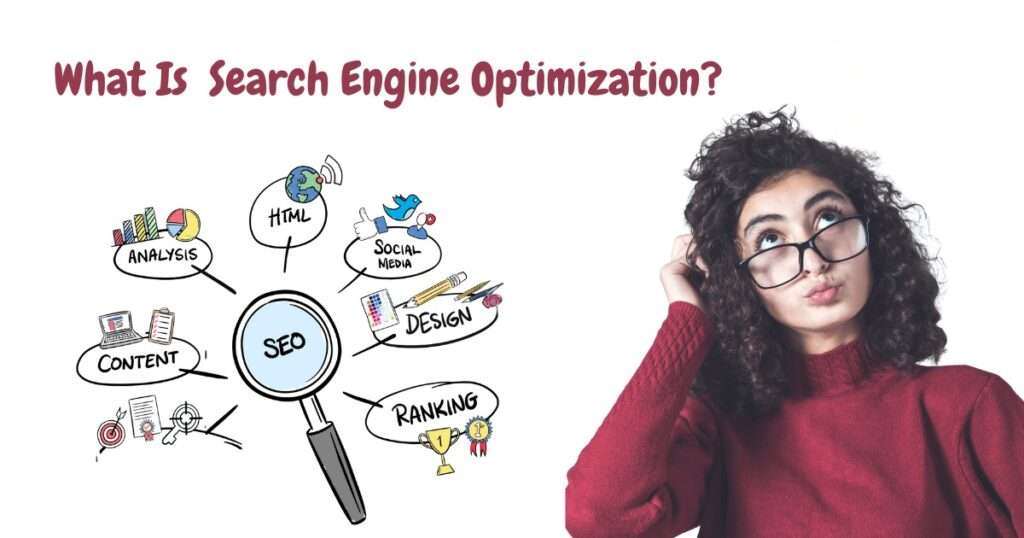
What Is Search Engine Optimization?
The phrase ‘what is search engine optimization’ uses spelling but the meaning of search engine optimization is the same as search engine optimization.
Search engine optimization is the process of:
- Structuring content so search engines can read it.
- Writing clearly so users find value.
- Building credibility so engines trust the site
It includes both technical and non-technical work. Some parts happen behind the scenes. Others are visible directly in the content.
SEO is not a one-time task. It is an ongoing practice that adapts as content grows, users change, and search engines evolve. You have to keep working on it.
The Three Core Areas of SEO
SEO is divided into three main parts. Each has a different role, but they work together.
1. Technical SEO
Technical SEO focuses on how a website functions.
It includes things like:
- Page loading speed
- Mobile usability
- Secure connections (HTTPS)
- Clean site structure
- Proper indexing
If a website is slow or it is broken or it is hard for search engines to crawl then the website will not do well even if it has content. The technical Search Engine Optimization makes sure that the website foundation is strong. Technical Search Engine Optimization is very important for a website.
2. On-Page SEO
On-page SEO deals with the content and structure of individual pages.
This includes:
- Page titles and headings
- Clear writing and organization
- Relevant internal links
- Descriptive URLs
On-page SEO helps search engines understand what a page is about and how different topics connect across a site.
3. Off-Page SEO
Off-page SEO is about things that happen outside of your website. This means it is, about signals that come from places not from your own website. Off-page SEO is important because it shows what other people think about your website.
The common example is backlinks. Links from other websites that point to your website. These backlinks are like references for your website. When people visit trusted websites and those trusted websites link to a page on your website the search engines think that page, on your website is more credible because of those backlinks.
Off-page SEO is not about quantity. It is about relevance and trust.
What Is SEO in Digital Marketing?
To answer what is SEO in digital marketing, it helps to look at how people behave online.
Most digital marketing begins with attention. SEO supports that by making sure your content appears when people actively search for information.
Unlike paid advertising, SEO does not involve paying for placement. Instead, it earns visibility through relevance and usefulness.
In digital marketing, SEO supports:
- Content marketing
- Brand discovery
- Long-term traffic growth
- User trust
SEO works best when it aligns with real user needs, not when it chases trends or algorithms.
What Is Search Engine Optimisation in Digital Marketing?
When asking what is search engine optimization in digital marketing?The focus is on strategy rather than tactics.
In digital marketing, search engine optimisation:
- Connects user intent with content
- Helps websites appear during research stages
- Supports other channels like social media and email
SEO often acts as the entry point. A user finds a page through search, reads it, and then decides whether to explore further.
This makes SEO especially valuable for education-driven and service-based websites.
How SEO Helps Users, Not Just Websites
SEO is often misunderstood as something done only for algorithms. In reality, good SEO improves user experience.
- Clear structure helps readers scan content.
- Fast pages reduce frustration.
- Accurate titles prevent confusion.
When SEO is done properly, users benefit first. Search engines follow.
This is why modern SEO focuses less on tricks and more on clarity.
Keywords are the words and phrases people type into search engines. They signal intent.
SEO uses keywords to:
- Understand what users are looking for
- Match content to those needs
However, keywords are not about repetition. A page does not rank better because a phrase appears many times. It ranks better because it answers a question clearly.
For example, someone searching “what is search engine optimization” wants an explanation, not a sales pitch. SEO works when content respects that intent.
Content and SEO
Content is central to SEO, but not all content performs well.
Effective SEO content is:
- Written for people, not engines
- Focused on one main topic
- Structured so ideas flow logically
Search engines evaluate how well content satisfies a search. They look at signals such as engagement, clarity, and relevance.
Long content is not automatically better. Clear content is
SEO Is Not Instant
One of the most important things to understand about SEO is timing.
SEO results take time because:
- Search engines need to discover changes
- Trust builds gradually
- Competition exists for most topics
SEO is closer to building a reputation than flipping a switch. It rewards consistency and accuracy over shortcuts.
Common SEO Misunderstandings
Many people form opinions about SEO based on outdated ideas.
Some common misconceptions include:
- SEO is about gaming algorithms
- SEO guarantees rankings
- SEO replaces all other marketing
In reality, SEO is cooperative, not manipulative. It works within guidelines and supports broader business goals.
Measuring SEO Success
SEO success is not only about ranking positions.
Other useful indicators include:
- Organic traffic growth
- Time spent on pages
- Search visibility for relevant topics
- User engagement
SEO measurement should reflect real outcomes, not vanity metrics.
The Long-Term Value of SEO
SEO builds assets over time. A well-written page can continue to attract visitors for years without additional promotion.
This long-term value is what makes SEO different from many other digital marketing activities. Once trust is established, it compounds.
However, this only happens when content remains accurate, updated, and useful.