

What is the Need of Python in the Future?
Python has become one of the world’s most popular programming languages due to its simplicity, versatility, and powerful ecosystem. Whether you’re building Artificial Intelligence applications, analyzing data, developing websites, or automating tasks, Python is the language of choice for millions of developers.
As technologies like AI, Machine Learning, Cloud Computing, Cyber Security, and Data Science continue to grow, Python’s importance is expected to increase even further.
If you’re planning a career in technology, learning Python is one of the smartest investments you can make for the future.
Why is Python So Popular?
Python is widely used because it offers:
- Easy-to-read syntax
- Beginner-friendly learning curve
- Large community support
- Thousands of open-source libraries
- Cross-platform compatibility
- Fast development
- Strong integration with modern technologies
Its simplicity allows beginners to learn programming quickly while enabling professionals to build complex applications efficiently.
Machine Learning
Machine Learning engineers use Python for:
- Predictive Analytics
- Classification Models
- Regression Models
- Recommendation Engines
- Fraud Detection
- Forecasting
Python simplifies the development and deployment of machine learning models.
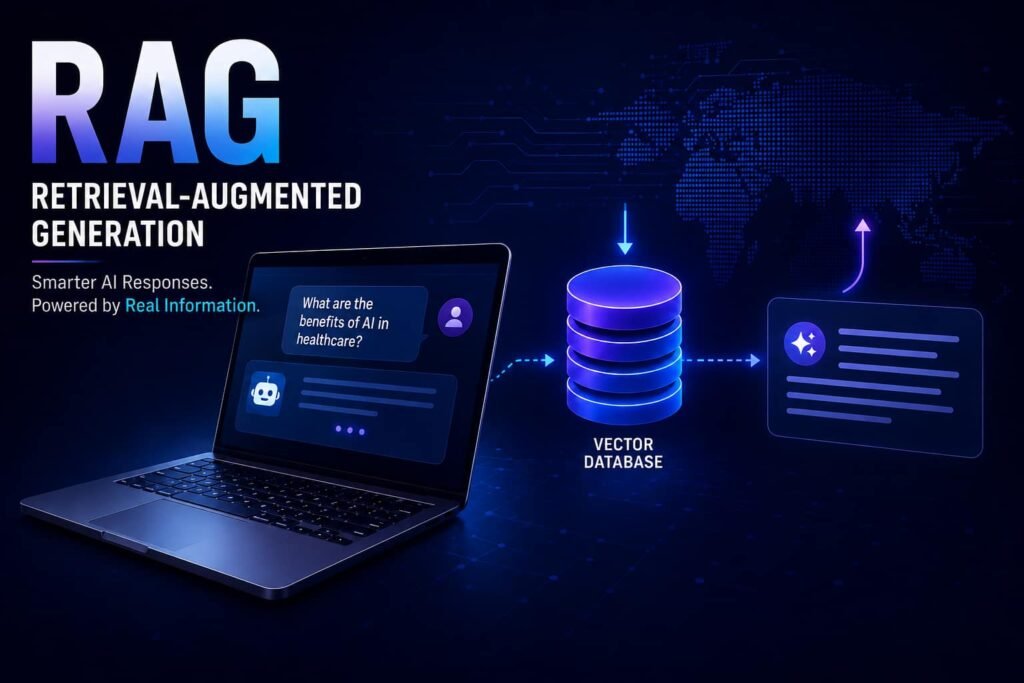
A standard Retrieval-Augmented Generation architecture consists of:
- User Interface
- Embedding Model
- Vector Database
- Retriever
- Large Language Model (LLM)
- Response Generator
The retriever fetches the most relevant information, while the LLM generates a natural-language response based on that information.
Web Development
Role of AI in Cyber Security
Python powers modern websites and web applications using frameworks like:
- Django
- Flask
- FastAPI
These frameworks help developers create secure, scalable, and high-performance web applic
Cyber Security
Cyber Security professionals use Python for:
- Ethical Hacking
- Network Scanning
- Penetration Testing
- Malware Analysis
- Security Automation
- Digital Forensics
Python’s flexibility makes it a favorite among security experts.
A standard Retrieval-Augmented Generation architecture consists of:
- User Interface
- Embedding Model
- Vector Database
- Retriever
- Large Language Model (LLM)
- Response Generator
The retriever fetches the most relevant information, while the LLM generates a natural-language response based on that information.